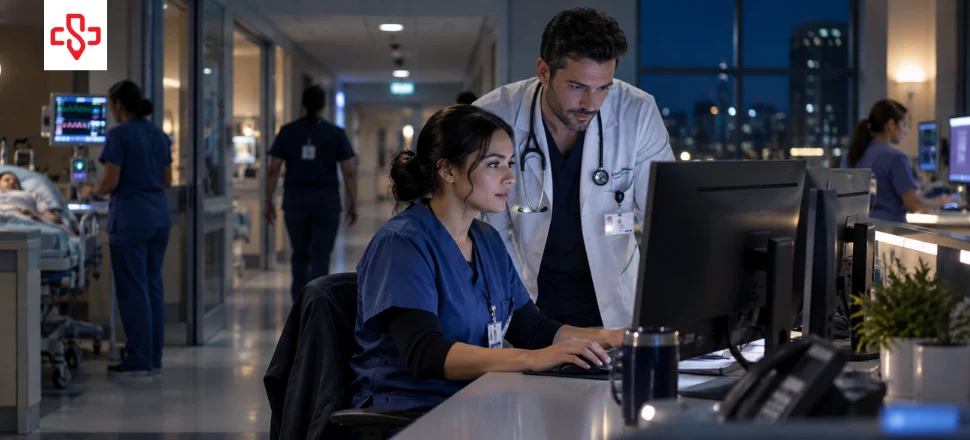









We enable stronger patient-provider relationships by removing screen distractions. Our medical scribes handle documentation so clinicians can engage fully, maintain eye contact, and deliver more personalized care.

Our highly trained medical scribes deliver precise, complete, and compliant clinical documentation. By ensuring consistency and attention to detail, we help reduce charting errors and support better clinical and operational outcomes.

Outsourcing medical scribes streamlines clinical workflows. With documentation handled efficiently, your providers can see more patients, reduce visit delays, and maintain productivity without compromising care quality.

Our medical scribe services support accurate coding and cleaner claims. Complete documentation helps reduce denials, strengthens compliance, and protects your organization’s revenue cycle.

We help reduce clinician burnout by taking documentation off your providers’ workload. Our outsourced medical scribes manage EHR tasks in real time, minimizing after-hours charting and allowing clinicians to focus on patient care—not paperwork.

We provide scalable medical scribe support across in-person, virtual, and after-hours care. Our outsourced model ensures consistent documentation quality across shifts, specialties, and care settings.